Amazon Opens a Robotized Warehouse in Beauvais, France
Amazon opened its 110,000 m² robotized fulfillment center in Beauvais on October 9, with 1,000 permanent jobs planned. Walmart's retrofit troubles show how different the two paths are.
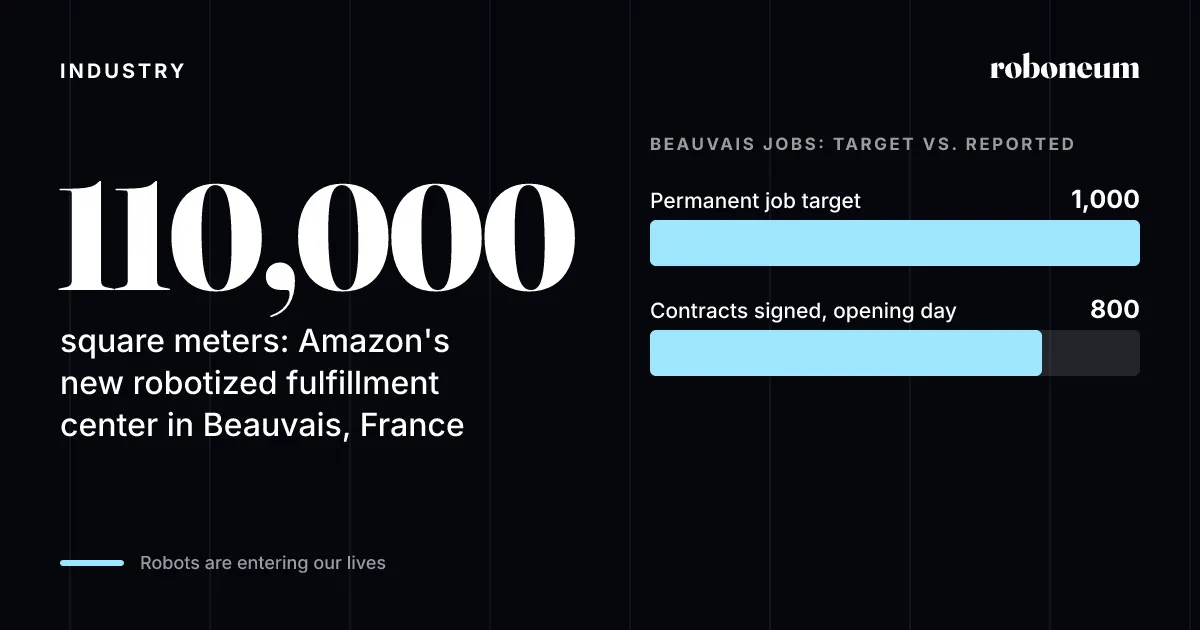
Amazon inaugurated a new fulfillment center in Beauvais, in France's Oise region, on Friday October 9, 2026. The site covers 110,000 m² and has 7 km of conveyors, according to Le Parisien, which calls it one of the first Amazon sites in France to be fully robotized. It matters because Walmart, which is automating older US warehouses, is reporting a much harder road.
Amazon opened a 110,000 m² robotized fulfillment center in Beauvais on October 9
The building sits in the Novaparc zone, north of Beauvais and near the airport, according to Le Parisien, franceinfo and La Tribune. Le Parisien says it began operating on September 28.
Amazon France, in an announcement dated May 6, 2026, says this is its 10th distribution center in France and the 5th in the country with its latest robotics. The investment is over €200 million. Eventually, several hundred thousand parcels a day are meant to leave the site, serving the Paris region and the west and north of France.
The number of robots is unclear. The local outlet actu.fr reports 2,000 robots, but we did not find that figure confirmed by Amazon. We also did not find Amazon's own release on the inauguration, so the opening details come from press reports.
What changes for warehouse work: fewer walking tasks, new maintenance roles
Amazon's target is 1,000 permanent (CDI) jobs, mainly logistics agents who receive, stock, pick, pack and ship orders. Entry pay is over €2,000 gross per month, according to the company. Recruitment started in mid-June 2026 with the Maison de l'Emploi et de la Formation du Grand Beauvaisis and France Travail, the French public employment service. No diploma or prior experience was required.
Staffing figures differ by source. On opening day, franceinfo reported 800 permanent contracts signed, with priority given to local residents far from employment. Actu.fr gives 300 employees in one headline and 350 in its text. These may reflect different moments or counts, and we cannot reconcile them.
Worker Chloé Vanthournout described her task to the press: she puts items into pods, the pods go to storage, and order picking then sends the items to customers.
Tye Brady, Amazon Robotics chief technology officer, said in an interview with La Tribune that Amazon has more than 1 million robots. He said employees are trained as robotics maintenance engineers, and that robotics, done well, makes the environment safer. These are company claims and have not been independently verified.
Brady also said a new version of Proteus, a robot that people can address in natural language, will be deployed in European warehouses in early 2027. The sources do not say whether it will operate in Beauvais.
Why Walmart finds automation harder: retrofits, breakdowns and power bills
Walmart is automating most of its roughly 200 US supply-chain buildings, which employ more than 140,000 warehouse workers, according to a Wall Street Journal report summarized by Quartz. About 80% of the projects are retrofits, because most buildings date from the 1980s and '90s. We saw the WSJ piece only through a search snippet and the Quartz summary.
Rob Montgomery, head of supply-chain operations for Walmart U.S., said: "We are kind of in this peak complexity." He said the hard part is re-engineering warehouses without taking them out of service.
- Boxes: old cardboard boxes are too big for the automated systems. The replacement boxes are 1½ inches shorter and must be taped shut, which adds cost.
- Reliability: the small shuttle robots break down too often, and oversize items such as big bags of dog food still need manual handling.
- Power: electricity at automated grocery facilities can reach $800,000 or more a month at peak, against about $250,000 when operations were more manual. The figure comes from a person familiar with the situation.
- Staffing: the engineers needed to run the sites cost more than unskilled warehouse workers.
Symbotic is Walmart's main partner for non-perishables, and Walmart holds a 12.6% stake. Quartz says the two have struggled to hit throughput targets and that dust can cause cascading stoppages. A Symbotic spokesman said under 10% of its robots were under repair at any time last year, and about 5% now. That is a company figure relayed by the WSJ.
Walmart has invested nearly $1 billion since 2016 in in-store automation. It bought Alert Innovation for $400 million in 2023 and sold it to Symbotic for $200 million, at a loss. Symbotic does not expect a workable in-store model until 2028.
Beauvais versus Walmart: two ways to automate, side by side
| Amazon, Beauvais | Walmart, US network | |
|---|---|---|
| Site type | New building, opened in 2026 | Mostly retrofits (about 80%) of 1980s and '90s buildings |
| Scale | 110,000 m², 7 km of conveyors | About 200 supply-chain buildings, 140,000+ workers |
| Jobs outlook | Target of 1,000 permanent jobs | Executives expect fewer warehouse workers over time |
| Main reported issue | None published yet | Breakdowns, box sizes, power costs, throughput |
| Source of figures | Press reports and Amazon announcement | WSJ report via Quartz |
The comparison has limits. Beauvais opened days ago, and no operating results have been published. Walmart's data comes from a report we saw only in summary.
Walmart executives say automation will eventually mean fewer warehouse workers, with remaining jobs focused on managing or fixing automated systems. They also say it should let the company process more inventory, faster and more precisely. Separately, SupermarketNews reports that Walmart opened its fifth next-generation fulfillment center on Thursday in Stockton, California: 900,000 sq ft, 1,000 workers. The retailer says these centers cut order fulfillment from 12 steps to 5.
What to watch next
- Whether Beauvais reaches its 1,000-job target, given 800 contracts reported on opening day.
- The Proteus rollout in European warehouses, planned for early 2027.
- Amazon's new robotics center at Ensisheim (Haut-Rhin), due at the end of 2027 with 2,000 jobs.
- Walmart's automation spending, which it expects to peak this year and next.
More robotics news
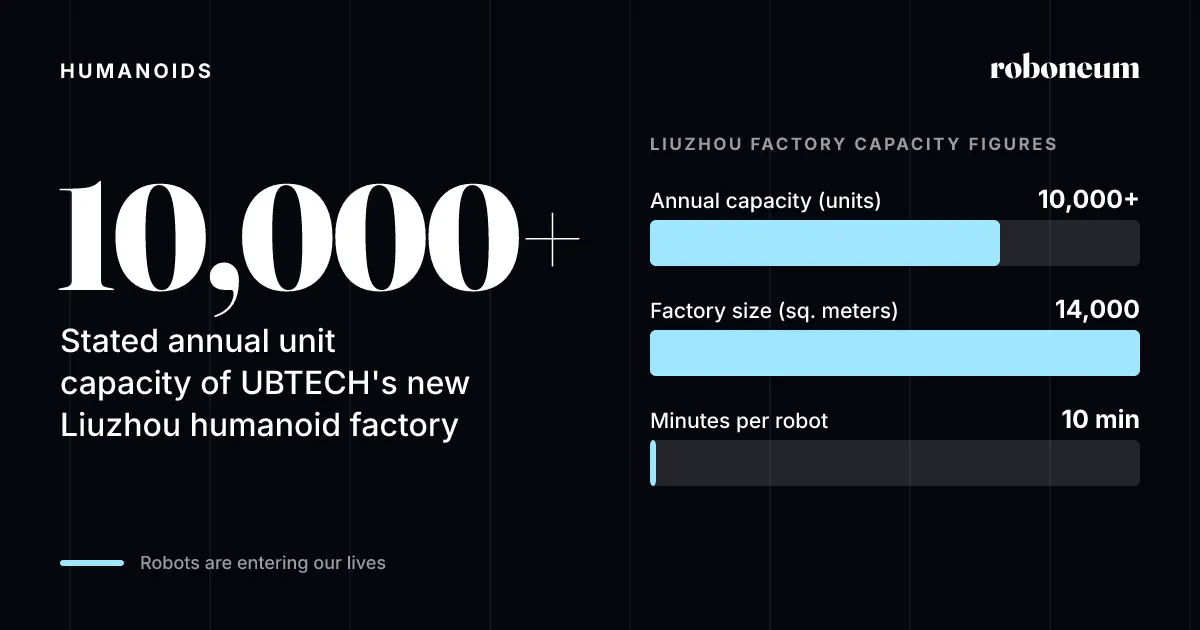
UBTECH and FAW-Volkswagen to Test Humanoid Robots in Logistics
UBTECH and FAW-Volkswagen signed a deal on Oct 8 to develop and test humanoid robots for factory logistics. It covers testing and demos, not a confirmed rollout.
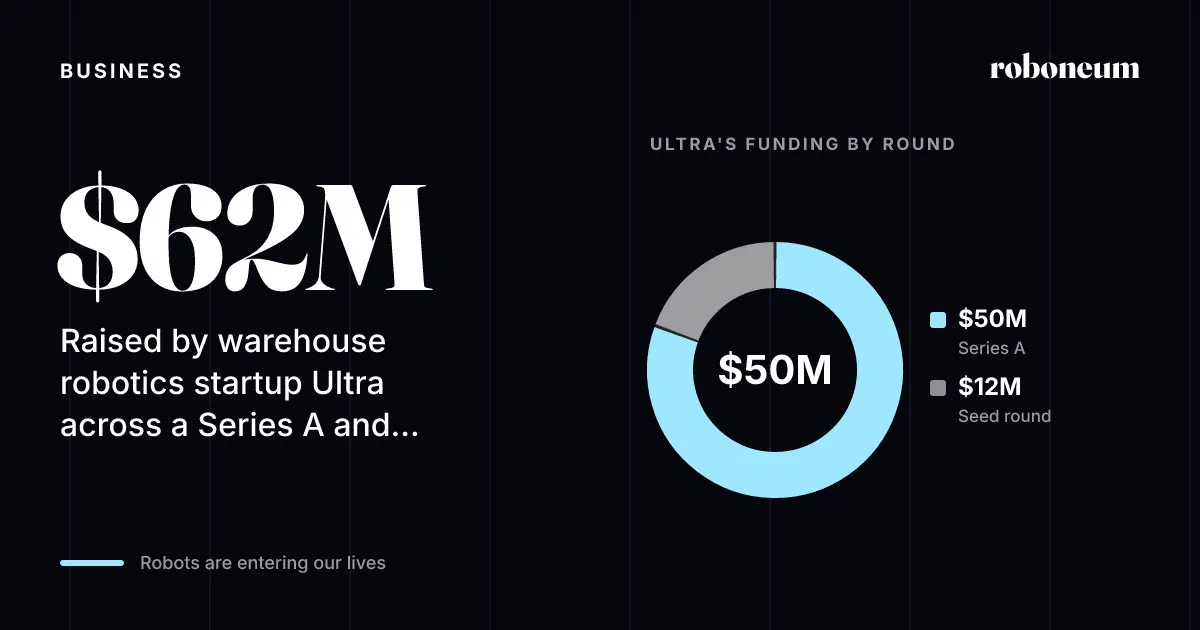
Ultra Raises $62 Million for Warehouse Robots as a Service
Brooklyn startup Ultra raised $62 million and expanded its partnership with Physical Intelligence. It leases warehouse robots by subscription, splitting robot bodies from AI brains.
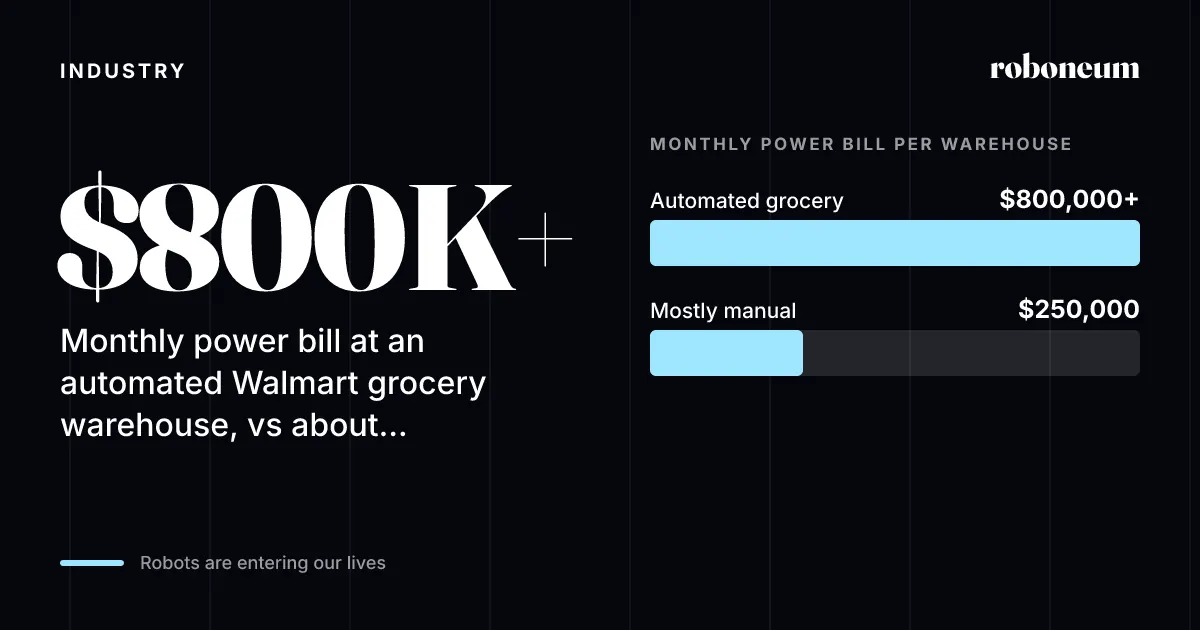
Walmart's Warehouse Automation Hits Snags on Dog Food and Boxes
Walmart's multibillion-dollar push to automate about 200 U.S. warehouses with Symbotic is hitting snags, from oversize dog food bags to rising power bills and a $200 million loss.