Walmart's Warehouse Automation Hits Snags on Dog Food and Boxes
Walmart's multibillion-dollar push to automate about 200 U.S. warehouses with Symbotic is hitting snags, from oversize dog food bags to rising power bills and a $200 million loss.
Walmart's automation of about 200 warehouses has hit repeated technical and financial problems
The Wall Street Journal reported on October 9, 2026 that Walmart's decade-long, multibillion-dollar push to automate its roughly 200 U.S. supply-chain buildings has run into repeated technical and financial problems. Robots have trouble with awkward items such as big bags of dog food and with the cardboard boxes Walmart uses, and costs and complexity are rising. Quartz, the New York Post, Futurism and Morning Brew summarized the report, and the details below are as they reported them.
Rob Montgomery, head of supply-chain operations for Walmart U.S., is overseeing the automation of most of those buildings. "We are kind of in this peak complexity," he said, according to the report. The hard part, he said, is re-engineering warehouses without taking them out of service.
Walmart did not promptly reply to the New York Post's request for comment, and Supermarket News could not reach a company spokesperson.
Why robots struggle with dog food bags, cardboard boxes and frozen turkeys
One core problem is breakpack: taking items out of cardboard boxes so they can be shipped individually. It is simple for human workers but proved a major challenge for automation. Walmart and its robotics partners tried technology that either did not work or cost too much. They then designed small wheeled robots with motion and obstacle sensors, which are being installed in more than a dozen warehouses.
The boxes are another obstacle. The cardboard boxes Walmart has used for more than two decades are too big for the automated systems. They cost an average of $1 and are meant to be reused. In the coming months Walmart plans to replace them with boxes 1.5 inches shorter that must be taped shut, an extra step that adds cost.
The miniature robots that shuttle goods around the warehouse break down too often, and the systems cannot handle some oversize products, such as big bags of dog food. According to the New York Post's summary, robotic arms in a newly automated California grocery warehouse mishandled large frozen turkeys.
Symbotic, Walmart's robotics partner, gave reliability figures through a spokesman, as cited by the Journal. Fewer than 10% of its robots were under repair at any given time last year, and the share has fallen to about 5%. Dust buildup can stop a robot, and stoppages can cascade into other problems, according to people familiar with the situation.
What automation costs: power bills, engineers and a $200 million loss
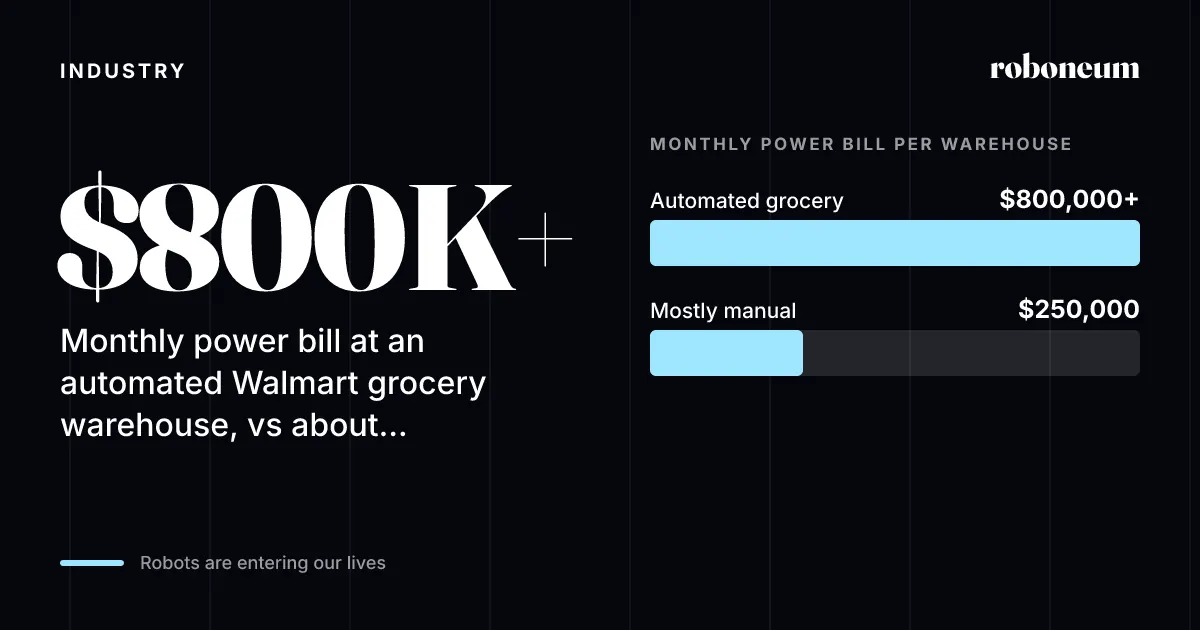
Quartz and the New York Post, citing the Journal and people familiar with the matter, say monthly power bills at automated grocery warehouses can reach $800,000 or more, against about $250,000 under mostly manual operation. Futurism, citing Journal sources, says engineers at automated warehouses cost more in payroll than unskilled warehouse workers.
Store-based e-commerce automation has also been costly. Quartz, citing the Journal, says Walmart has invested nearly $1 billion since 2016. That includes a $400 million acquisition of Alert Innovation in 2023, which Walmart then sold to Symbotic at a loss for $200 million.
Supermarket News says the previous system was rolled out in about 20 stores and proved too inefficient. Symbotic is installing a new test version in a Dallas Walmart. According to the Journal, citing Symbotic executives on a recent earnings call, the company does not expect a workable model until 2028.
Symbotic's deal with Walmart: 42 warehouses by around 2030, goals not yet met
Symbotic is a robotics company based in Wilmington, Mass., and Walmart holds a 12.6% stake in it. In 2022 Symbotic announced a deal to expand its systems to all 42 Walmart nonperishable warehouses by around 2030.
People familiar with the situation said it was difficult for Symbotic to meet Walmart's goals, mainly the desired throughput, meaning the rate at which goods are processed. Symbotic CEO Rick Cohen said in an emailed statement that automating Walmart's warehouses "takes time, hard work, and a strong partnership defined by trust."
Executives at both companies said they have not yet achieved the goal of building tightly wrapped pallets in the exact order needed for unloading at stores, but have made progress.
Where Walmart says automation stands, and what it means for its 140,000 warehouse workers
Montgomery said the Brooksville, Fla., warehouse, which covers 1.6 million square feet and handles nonperishables, is now nearly "fully automated," meaning about 80% of its inventory moves that way. He said items such as large-screen TVs and jumbo bags of dog food will need manual help for the foreseeable future.
Morning Brew says executives reported missing a January automation target but were getting close by August. It reports that over 65% of stores were receiving some automated freight and over half of e-commerce goods moved through automated systems.
Walmart expects automation spending to peak this year and next. The company says automation should let it process inventory faster and more precisely, cut out-of-stock items and reduce costs. Montgomery said leadership and the board see automation as a long-term priority.
Walmart also says it will need fewer warehouse workers over time. It currently employs more than 140,000. Executives said layoffs should not be necessary because warehouse turnover is high. Separately, Supermarket News reports that Walmart opened its fifth next-generation fulfillment center in Stockton, Calif., with 900,000 square feet and more than 1,000 jobs.
| Problem | What was reported | Response |
|---|---|---|
| Oversize boxes | Boxes used for 20+ years are too big for automated systems | Replacement with boxes 1.5 inches shorter, taped shut, in coming months |
| Breakpack | Removing items from boxes was hard to automate | Small wheeled robots with sensors going into more than a dozen warehouses |
| Shuttle robots | Break down too often; dust can stop them | Symbotic says under 10% under repair last year, now about 5% |
| Oversize items | Dog food bags, large TVs and frozen turkeys cause trouble | Manual help for the foreseeable future, per Montgomery |
| Power costs | $800,000 or more a month vs. about $250,000 in mostly manual grocery sites | Walmart expects spending to peak this year and next |
| Store e-commerce system | Earlier system in about 20 stores was too inefficient | New test version in Dallas; workable model not expected until 2028 |
Large-scale warehouse automation is difficult for other retailers too. For a comparison, see Amazon's robotized warehouse in Beauvais, France.
More robotics news
Mecka AI Raises $60 Million to Train Robots With Human Data
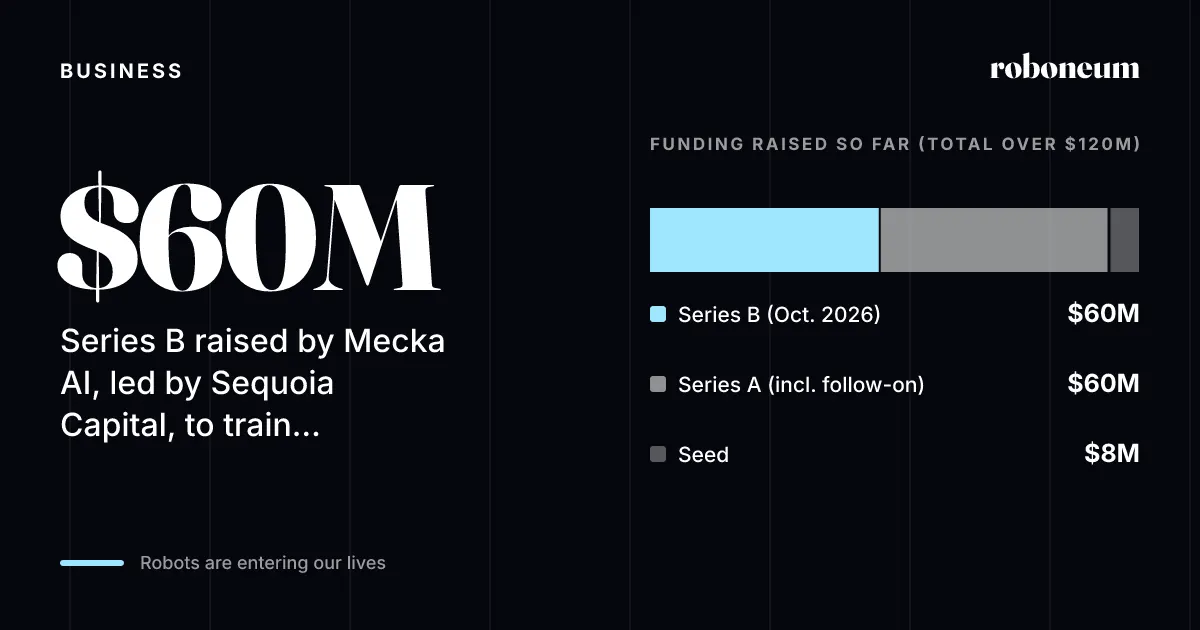
Mecka AI's $60 million Series B, led by Sequoia, backs a bet that human data, not hardware, is what holds general-purpose robots back. Here is how the startup collects it.
Amazon Opens a Robotized Warehouse in Beauvais, France
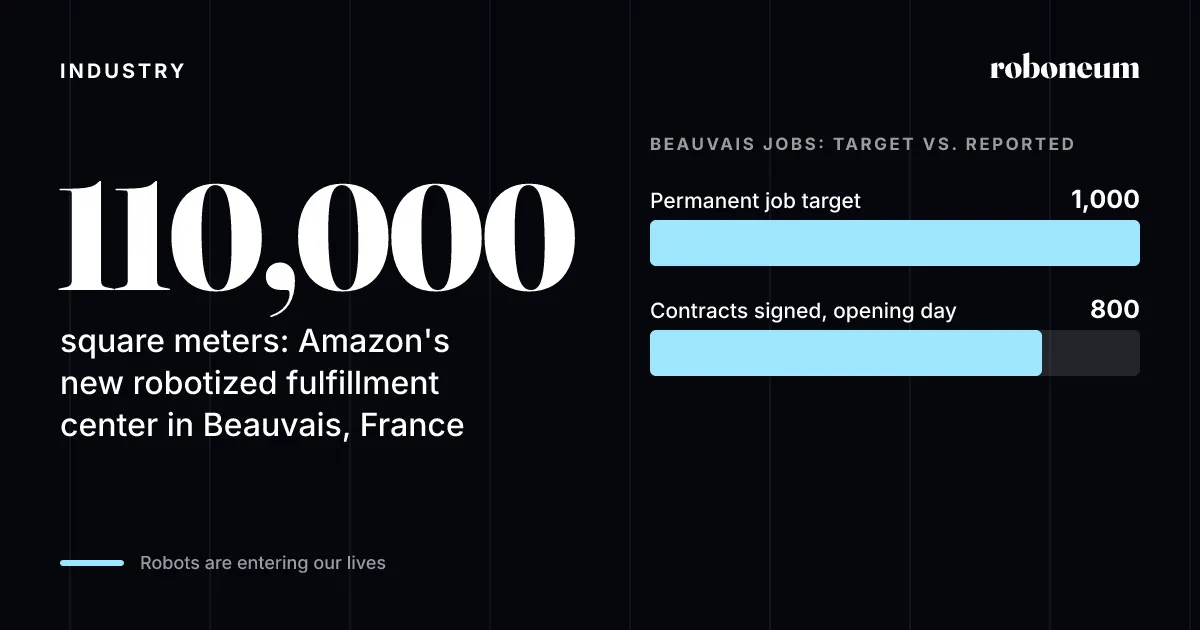
Amazon opened its 110,000 m² robotized fulfillment center in Beauvais on October 9, with 1,000 permanent jobs planned. Walmart's retrofit troubles show how different the two paths are.
Wandercraft Opens a Paris Factory, Eyes a Million Robots a Year
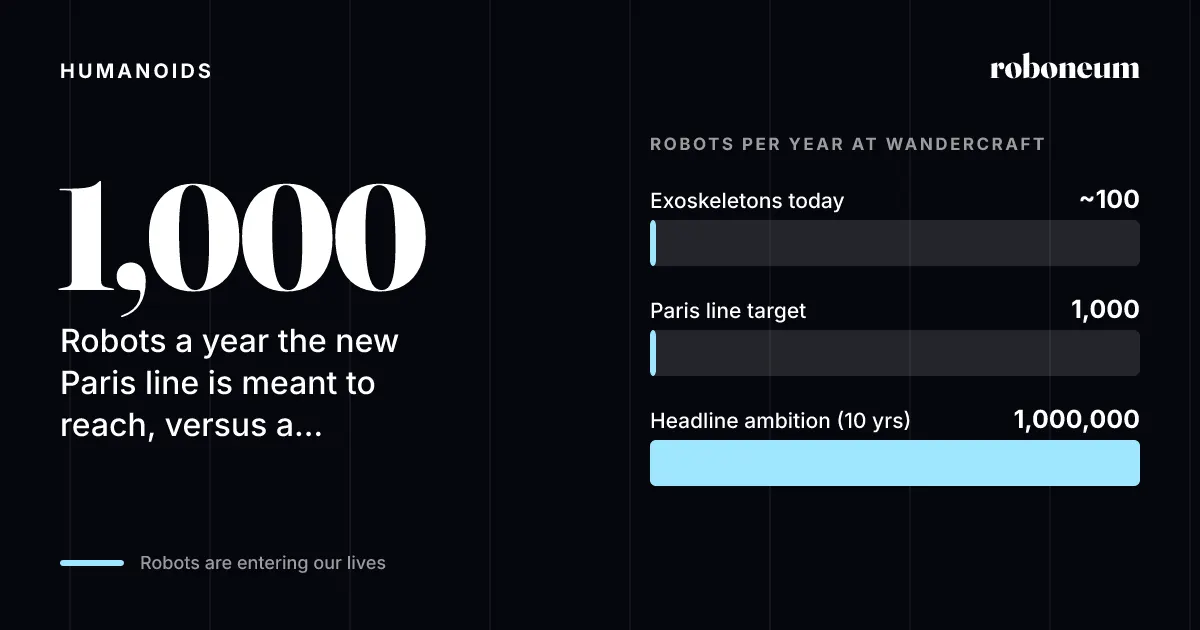
Wandercraft has moved into a 4,300 m² former post office in Paris, and one headline cites a million robots a year. Every capacity figure we could verify is about 1,000 to 2,000 units.