Ultra Raises $62 Million for Warehouse Robots as a Service
Brooklyn startup Ultra raised $62 million and expanded its partnership with Physical Intelligence. It leases warehouse robots by subscription, splitting robot bodies from AI brains.
Ultra, a Brooklyn-based warehouse robotics startup, announced on Friday, October 9, 2026, that it raised $62 million and deepened its partnership with the AI firm Physical Intelligence, according to Fortune. The company leases its robots on a monthly subscription, a model known as robots as a service.
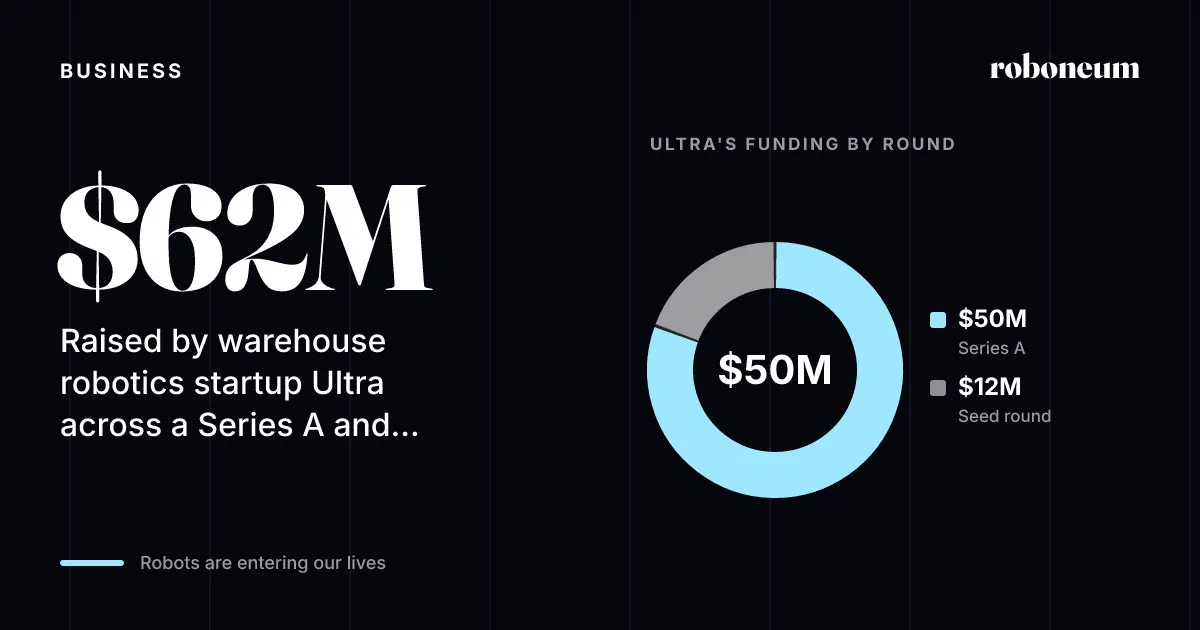
Ultra raised $62 million across a $50 million Series A and a $12 million seed round
The money came in two rounds. The larger one is a $50 million Series A, led by Framework Ventures with participation from Y Combinator. A Series A is typically a startup's first big round after early funding, used to scale a product that already has customers.
The earlier $12 million seed round was led by Y Combinator and Next View. A seed round is the first outside money a young company raises.
Ultra has not publicly disclosed a valuation, according to remio. Fortune reports the funding alongside a deeper tie-up with Physical Intelligence, a company that develops AI models for robots.
How the robots-as-a-service model works: an integration fee, then a monthly fee
Robots as a service means customers lease robots instead of buying them. Fortune reports that Ultra's customers pay an up-front integration fee so Ultra can install the robots, then an ongoing monthly fee that covers hardware and software support.
CEO Jon Miller Schwartz said, according to Fortune, that the model has gained enough traction for Ultra to raise its prices. He said the company has booked significant revenue but did not say how much.
According to the company, Ultra's robots have packed more than half a million orders for shipping. That figure comes from Ultra and has not been independently verified.
A body-and-brains split: Ultra builds the robots, Physical Intelligence supplies the AI
Fortune describes Ultra's approach as "body and brains." Ultra builds and installs the robots. Physical Intelligence supplies the AI that lets them learn and improve quickly in response to each customer's set-up.
Fortune calls this a division of labor. Ultra can focus on building robots, while Physical Intelligence gets data from outside the lab to train its models.
Secondary outlets identify Ultra's robot as Operator (OP1), a stationary dual-arm robot used for packing, sorting and kitting, which means assembling items into sets for shipment.
Humanoids Daily says the relationship with Physical Intelligence predates this announcement. It reports that Ultra earlier described a full shift at 96.4% autonomy using Physical Intelligence's π0.6 model, with human operators stepping in when the model hits problems. That figure is company-reported and has not been independently verified.
AI Weekly and ValueAdd VC put Physical Intelligence's valuation at $5.6 billion. No company press release or direct statement from Physical Intelligence appeared in the coverage reviewed.
What is known and what Ultra has not disclosed
| Item | What is reported | Source |
|---|---|---|
| Total raised | $62 million | Fortune |
| Series A | $50 million, led by Framework Ventures, with Y Combinator | Fortune |
| Seed round | $12 million, led by Y Combinator and Next View | Fortune |
| Pricing model | Up-front integration fee, then a monthly fee for hardware and software support | Fortune |
| Orders packed | More than half a million (company claim) | Fortune |
| Robot | Operator (OP1), stationary dual-arm robot | Secondary outlets |
| Autonomy | 96.4% over a full shift (company-reported) | Humanoids Daily |
Not disclosed: a valuation, a total number of deployed robots, and detailed revenue, according to remio and Fortune.
The order count and the price increase are the only signs of commercial use so far, and both are statements from Ultra. Independent figures on how many robots are running at customer sites are not available.
For related reading, see another robotics startup that raised $60 million to train robots on human data and Amazon's robotized warehouse in Beauvais, France.
More robotics news
Walmart's Warehouse Automation Hits Snags on Dog Food and Boxes
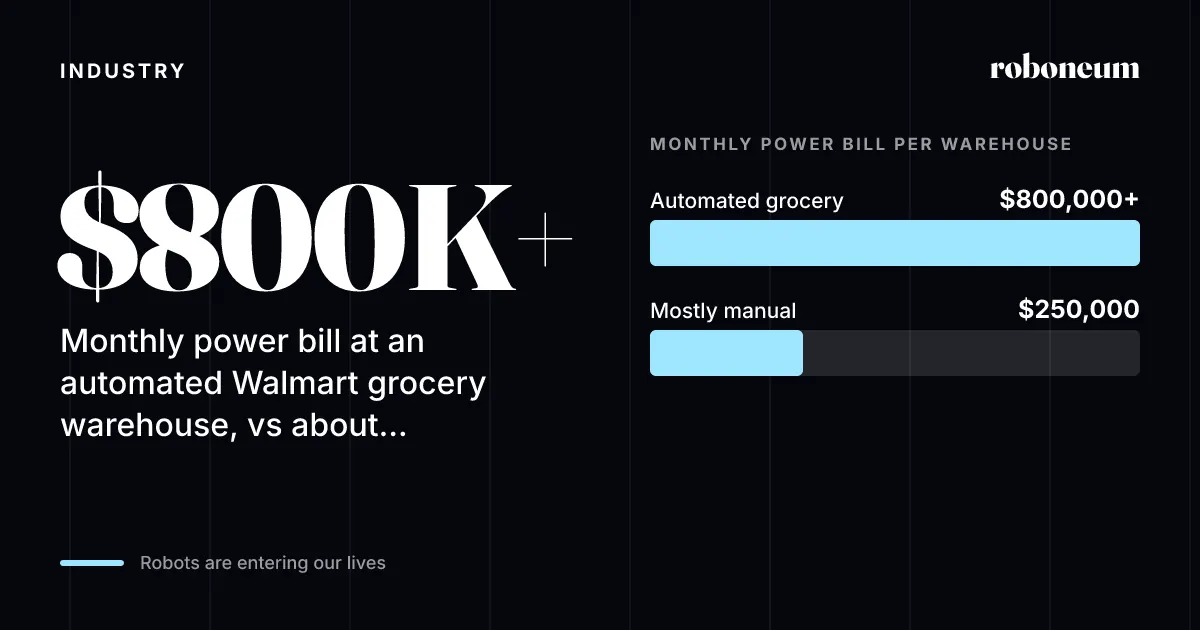
Walmart's multibillion-dollar push to automate about 200 U.S. warehouses with Symbotic is hitting snags, from oversize dog food bags to rising power bills and a $200 million loss.
Mecka AI Raises $60 Million to Train Robots With Human Data
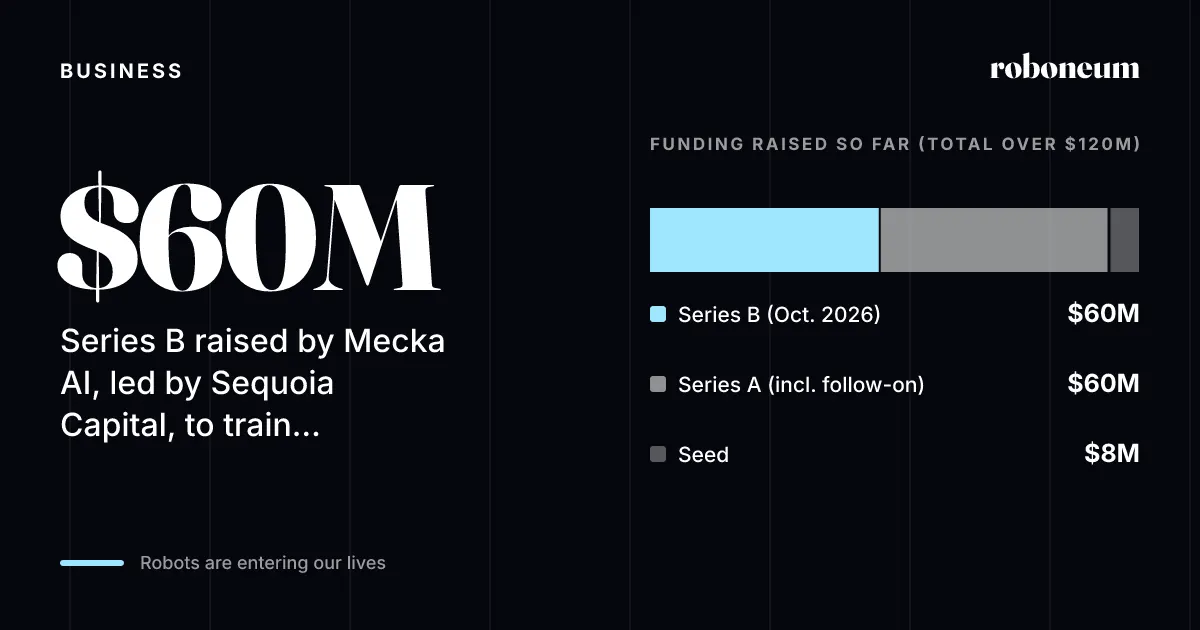
Mecka AI's $60 million Series B, led by Sequoia, backs a bet that human data, not hardware, is what holds general-purpose robots back. Here is how the startup collects it.
Amazon Opens a Robotized Warehouse in Beauvais, France
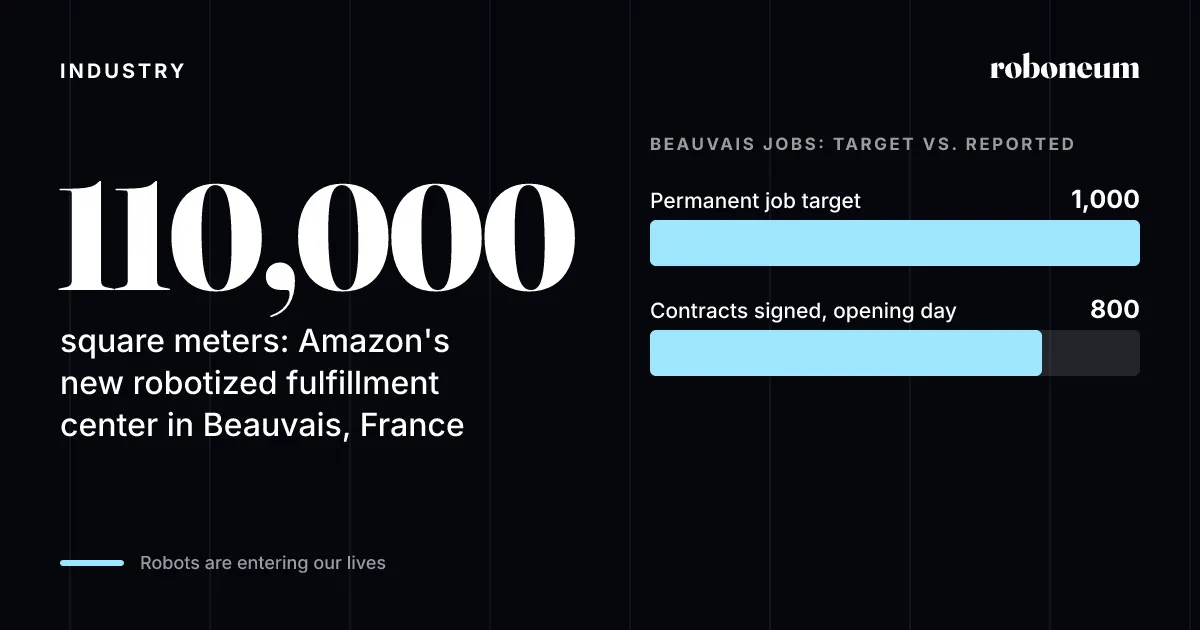
Amazon opened its 110,000 m² robotized fulfillment center in Beauvais on October 9, with 1,000 permanent jobs planned. Walmart's retrofit troubles show how different the two paths are.