Wandercraft Opens a Paris Factory, Eyes a Million Robots a Year
Wandercraft has moved into a 4,300 m² former post office in Paris, and one headline cites a million robots a year. Every capacity figure we could verify is about 1,000 to 2,000 units.
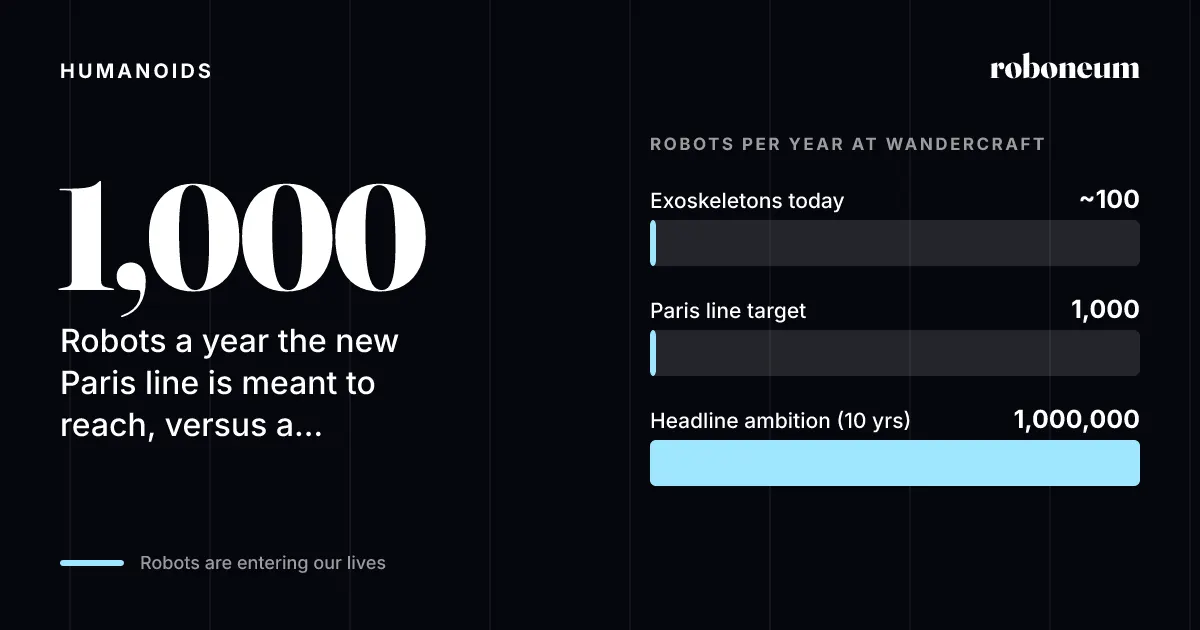
Wandercraft, the French maker of walking exoskeletons and the Calvin-40 humanoid, has opened a new 4,300 m² headquarters in Paris's 13th arrondissement. Planète Robots lists the inauguration on 7 October 2026. A headline from L'Usine Nouvelle the next day puts the ambition at a million robots a year within a decade, but every capacity figure we could verify is about 1,000 to 2,000 units a year.
An exoskeleton is a wearable robotic frame that helps a person stand and walk. Wandercraft sells them for medical rehabilitation, and it is now adding a humanoid, a robot with a human-like body, to the same factory.
Wandercraft has opened a 4,300 m² site in Paris's 13th arrondissement
According to JLL, the real-estate adviser, the site is a former La Poste sorting center on avenue d'Italie. It has a dedicated zone for production, maintenance, logistics and storage. JLL's page, dated June 2026, said the fit-out works were due to finish at the end of that month.
The building also houses offices, research and development, and Walk in Paris, a medicalized walking center where patients try the exoskeletons with medical staff. A listing on Team PACT Ventures says a production line is planned there for Eve, Atalante and the Calvin-40 humanoid.
Before the move, Le Monde reported on 8 February 2026 that the company occupied two floors of 1,000 m² near the Hôtel de Ville, with 140 employees. It planned to move in summer 2026 to a former La Poste building four times larger.
The million-robots-a-year claim comes from a headline we could only partly verify
L'Usine Nouvelle published the piece on 8 October 2026 under the headline «Nous passerons le million de robots produits par an avant dix ans» (roughly: "We will pass one million robots produced per year within ten years"). We could not open the article. Only the headline is confirmed.
Who said it, the exact wording and the context are not confirmed. Other pages point to Wandercraft's CEO as the company's spokesperson, but none attributes this quote to him.
In April 2026, CEO Matthieu Masselin told Journal du Net that the company did not want to give production figures yet. He added that, according to various studies, there could be one million humanoid robots in the world by 2030. That is a global estimate, not a Wandercraft target.
Verified capacity is about 1,000 to 2,000 robots a year, far below a million
The figures we found differ slightly, but none is close to a million. Wandercraft's operations director, Audrey Baudet, told Le Monde in February 2026 that the company made about 100 exoskeletons a year and would rise to 1,000 in the new premises.
| Source | Date | Capacity figure |
|---|---|---|
| Le Monde (Audrey Baudet) | 8 Feb 2026 | About 100 exoskeletons a year today; 1,000 in the new premises |
| Journal de l'Auto | June 2026 | 1,000 to 2,000 robots a year; talk of eventually tens of thousands of Calvin units a year |
| Challenges | 17 Aug 2026 | Production line able to build about 1,000 robots a year |
Challenges also reports revenue under €10 million and says the company estimates its robot sales at 150 units over five years. Set against a million a year, the gap is several orders of magnitude.
Renault is meant to take over manufacturing above 1,000 units
Renault Group took a minority stake in Wandercraft in 2025, after a Series D funding round in June 2025. Sifted and Challenges put the round at $75 million; Le Figaro's headline says 75 million euros, which conflicts with those two.
Baudet told Le Monde that Renault would take over manufacturing above 1,000 units. In April 2026, Masselin said that above a certain volume Renault would take over manufacturing directly. Any path toward very large volumes would therefore run through Renault, not the Paris line.
Renault unveiled Calvin on 8 June 2026, according to Journal de l'Auto. It plans 10 robots at French and Spanish sites by the end of 2026 and 350 across Europe by the end of 2027. Wandercraft says Calvin-40 is working on the line at Renault's Douai plant.
A Wandercraft press release of 4 September 2026 says the company has 12 customers for Calvin-40, across automotive, logistics, retail, healthcare and defense. These are the company's own statements.
Medical exoskeletons remain the commercial base
Wandercraft says Atalante, its clinical exoskeleton, was the first self-balancing walking exoskeleton to receive CE marking in Europe, in 2019. Le Monde gives its price as €180,000 to €200,000 and said it was used in 120 rehabilitation centers and hospitals, 90 of them in France. Wandercraft's own page cites more than 150 clinical and research centers.
Eve, the personal exoskeleton, received FDA authorization, reported on 28 August 2026 by Planète Robots. Challenges says CE marking should follow in September.
Challenges quotes a CEO named Nicolas Simon saying exoskeletons and humanoids share the same technology platform. It says he prefers specific use cases to the general-purpose humanoid race led by China. Journal du Net names Matthieu Masselin as CEO, so the sources disagree on the name and we cannot resolve it.
For scale, Planète Robots cites an International Federation of Robots release of 24 September 2026 saying five million robots now operate in factories worldwide.
What to watch next: a checklist
- Whether Wandercraft or Renault publishes an official volume target and timeline.
- Who made the million-robot statement, and in what context.
- Whether the Paris line reaches the stated 1,000 units a year.
- Whether Eve receives CE marking, as Challenges expects.
- Whether the 350 Calvin robots planned across Europe are delivered by the end of 2027.
More robotics news
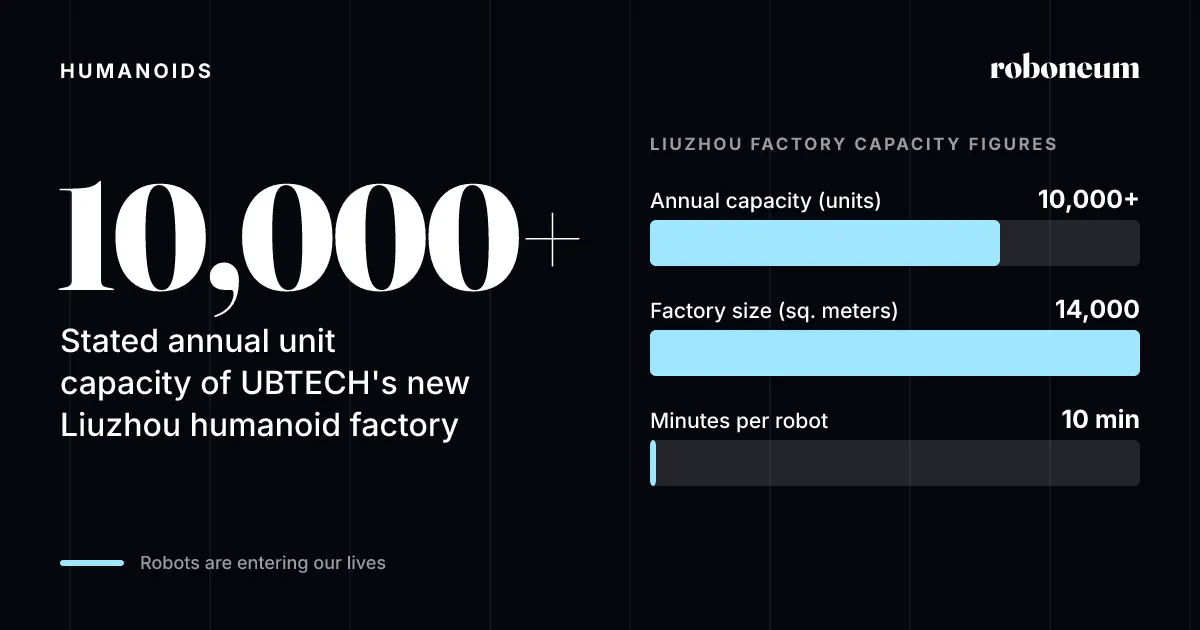
UBTECH and FAW-Volkswagen to Test Humanoid Robots in Logistics
UBTECH and FAW-Volkswagen signed a deal on Oct 8 to develop and test humanoid robots for factory logistics. It covers testing and demos, not a confirmed rollout.
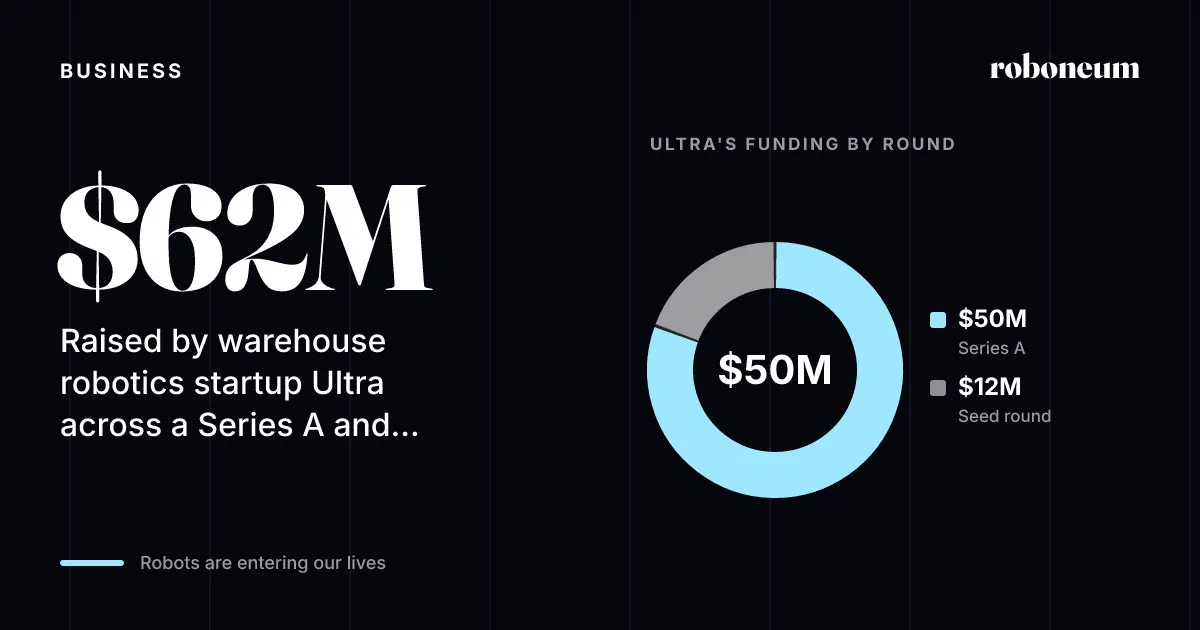
Ultra Raises $62 Million for Warehouse Robots as a Service
Brooklyn startup Ultra raised $62 million and expanded its partnership with Physical Intelligence. It leases warehouse robots by subscription, splitting robot bodies from AI brains.
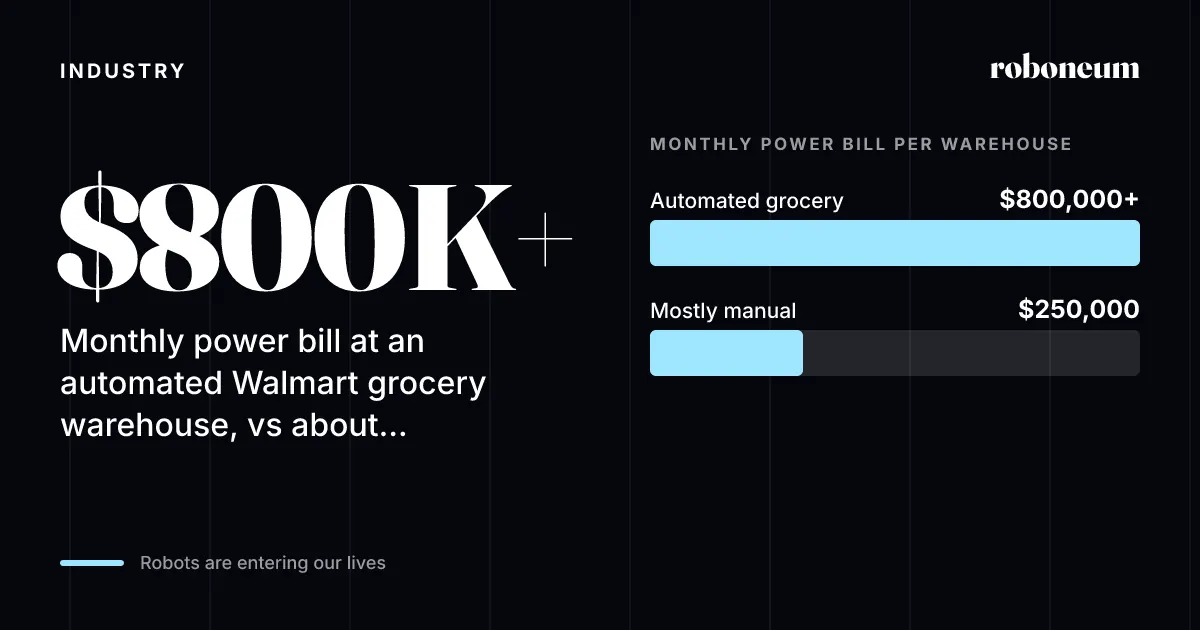
Walmart's Warehouse Automation Hits Snags on Dog Food and Boxes
Walmart's multibillion-dollar push to automate about 200 U.S. warehouses with Symbotic is hitting snags, from oversize dog food bags to rising power bills and a $200 million loss.