Waymo Closes Its First Debt Deal: a $5 Billion Term Loan
Waymo has closed a $5 billion term loan, the first debt financing in its history, led by PIMCO, Blackstone and Sixth Street. The company has not detailed how it will spend the money.
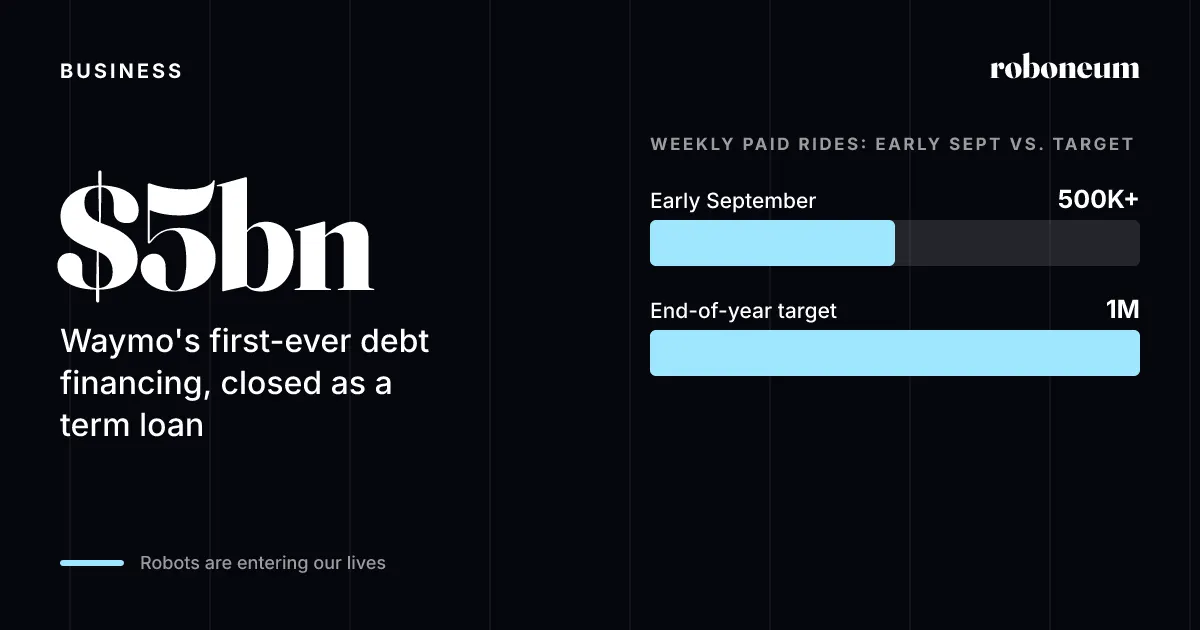
Waymo announced on Thursday, October 8, 2026, that it closed a $5 billion term loan, the first debt financing in the company's history. A term loan is a lump sum borrowed from lenders and repaid over a set period. Waymo called the deal "an important step in our evolution into a scaling commercial enterprise."
The company says the loan complements its equity financing, meaning money raised by selling shares, and gives it "additional financial flexibility to strengthen our balance sheet."
Who lent the money: PIMCO, Blackstone and Sixth Street lead
According to Waymo, PIMCO, Blackstone and Sixth Street were the lead syndicated lenders. A syndicated loan is one shared among many lenders. Capital Group, Loomis Sayles and T. Rowe Price were significant lenders.
The other lenders were Apollo, Blue Owl, Diameter Capital Partners, Franklin Templeton, Fidelity Management & Research Company, HPS Investment Partners and Oaktree. Goldman Sachs was sole lead bookrunner, the bank that organized the deal.
What Waymo says the money will fund
Waymo says the loan will "accelerate the continued expansion of our fully autonomous ride-hailing service across the United States and internationally." The company has not published a spending breakdown, and its statement mentions expansion only in general terms.
A Waymo spokesperson told TechCrunch the loan positions the company to "capitalize on the significant opportunities ahead, especially as a scaling business with proven commercial demand and improved road safety outcomes in the communities in which we operate." Those are the company's own claims.
The Verge offers its own reading, which neither Waymo nor the lenders have confirmed. Waymo has to buy cars, sensors, charging stations and depots, and lenders are more willing to lend against physical assets like these. The outlet also says debt is cheaper than giving away equity at this stage.
Pricing details come from anonymous sources, not Waymo
Waymo did not disclose the loan's terms in the blog excerpts reviewed. The figures below come from people familiar with the matter, as reported by Bloomberg and relayed by Trade Talks.
- The loan was upsized from an initial target of more than $3 billion.
- It priced at 5.25 percentage points over the benchmark rate.
- Yahoo Finance reports it was expected to carry no credit rating, with a spread of more than 500 basis points. A basis point is one-hundredth of a percentage point, so 500 bps equals 5 percentage points.
- Negotiations began in early September, according to Yahoo Finance.
From Alphabet and equity rounds to debt: how Waymo was funded so far
Until now, Waymo relied on Alphabet and outside investors, according to TechCrunch. Alphabet remains the majority investor.
| Date | Funding | Amount |
|---|---|---|
| 2020 | Outside funding round | $3.2 billion |
| 2021 | Outside funding round | $2.5 billion |
| 2024 | Series C | $5.6 billion |
| February 2026 | Equity round at a $126 billion valuation | $16 billion |
| October 2026 | Term loan (first debt) | $5 billion |
The February 2026 round was led by Dragoneer, DST Global and Sequoia. The new loan is smaller than that round but is a different kind of money: it must be repaid with interest, while equity investors take a share of the company.
The scale Waymo is chasing: 1 million paid rides a week
Waymo operates in 15 markets and is testing in London and Tokyo, with launches planned. It had roughly 4,000 vehicles in U.S. service as of May, according to Yahoo Finance.
The company is targeting 1 million paid rides per week across 20 cities worldwide by the end of this year. In early September it was providing more than 500,000 paid trips per week across 14 cities. Reaching the target would roughly double weekly rides in under four months.
Other robotics companies are also raising money to scale physical operations, such as Ultra, which raised $62 million for warehouse robots as a service, while large firms keep investing in sites like Amazon's robotized warehouse in Beauvais.
More robotics news
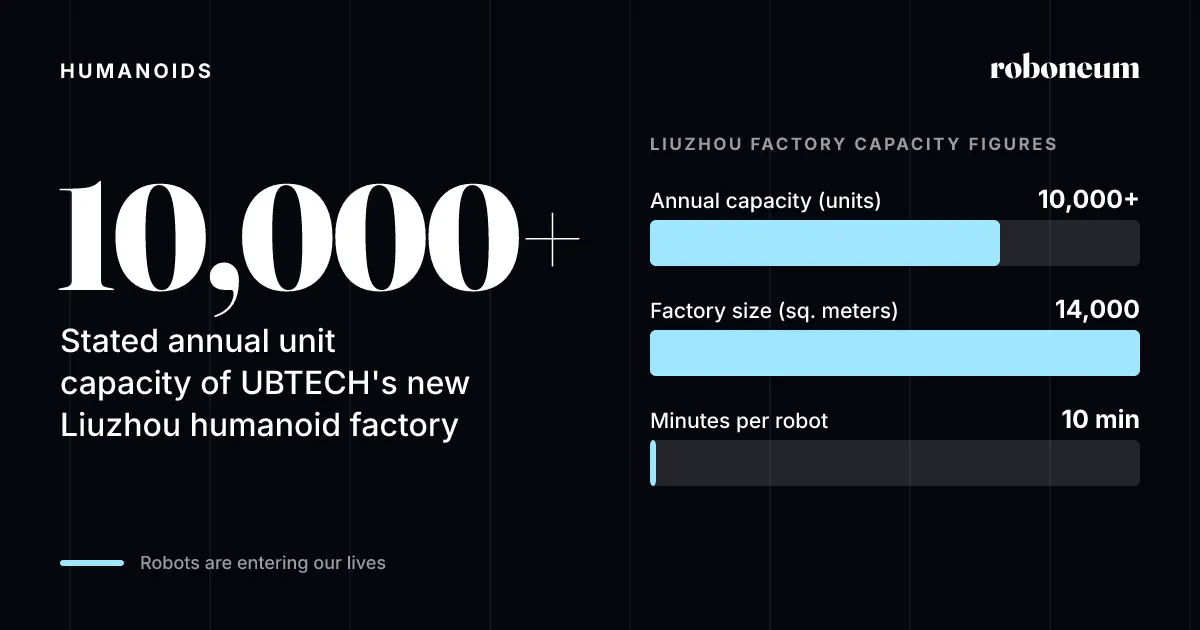
UBTECH and FAW-Volkswagen to Test Humanoid Robots in Logistics
UBTECH and FAW-Volkswagen signed a deal on Oct 8 to develop and test humanoid robots for factory logistics. It covers testing and demos, not a confirmed rollout.
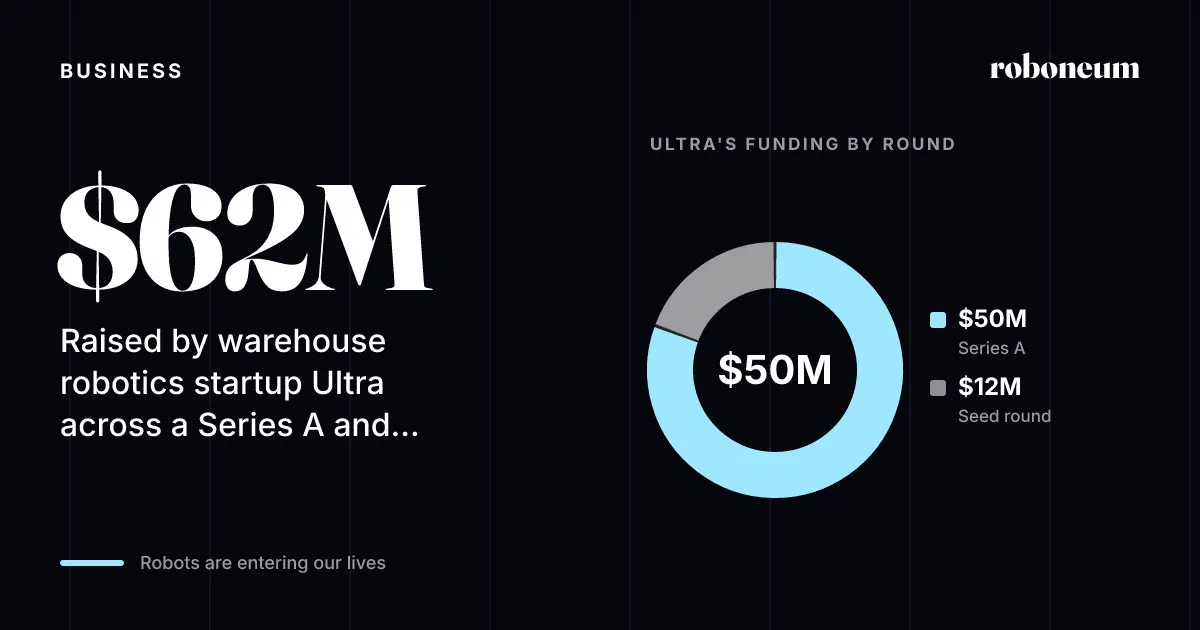
Ultra Raises $62 Million for Warehouse Robots as a Service
Brooklyn startup Ultra raised $62 million and expanded its partnership with Physical Intelligence. It leases warehouse robots by subscription, splitting robot bodies from AI brains.
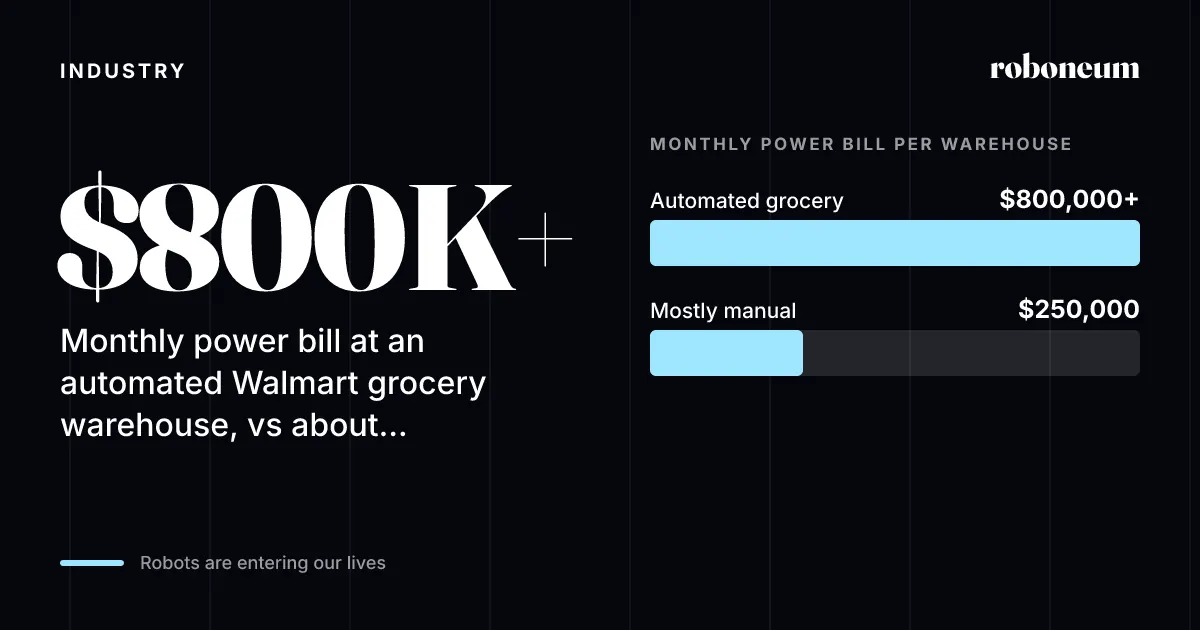
Walmart's Warehouse Automation Hits Snags on Dog Food and Boxes
Walmart's multibillion-dollar push to automate about 200 U.S. warehouses with Symbotic is hitting snags, from oversize dog food bags to rising power bills and a $200 million loss.